
101's Getting a Filter — So Police Calls Don't Sit Behind Fly-Tipping Cumbria Police Introduce AI Call Routing to Cut 101 Waits
Marra Mode is how we'd tell you this in the Co-op. Switch it off for the straight version.
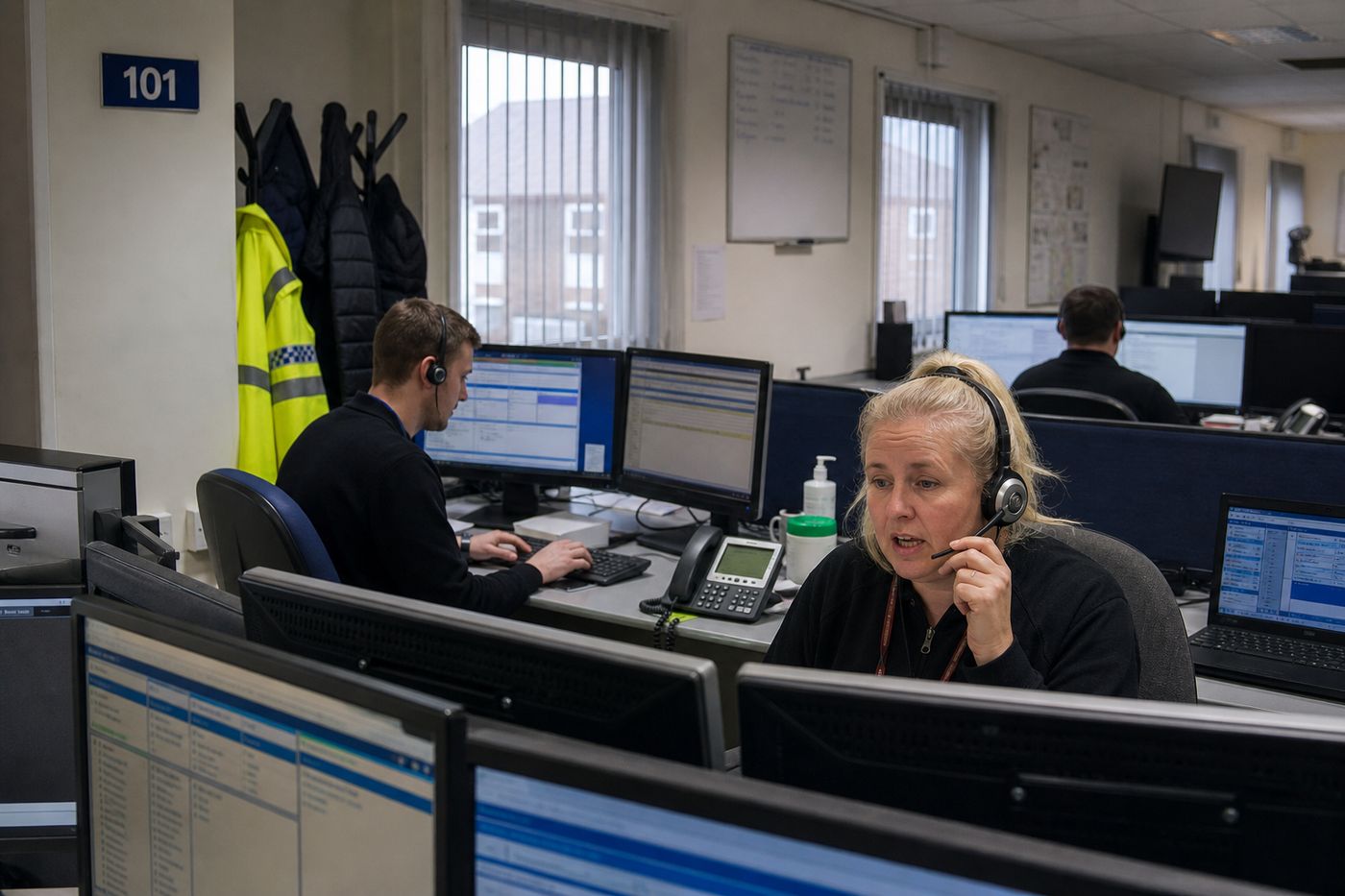
From 18 August, 101 will try to send fly-tipping and noise complaints the right way before you sit in a police queue. If it's actually a police job, or you're not sure, you still get through.
Cumbria Police have put a new filter on 101 as of 18 August. The idea is simple: if you're ringing about the council, the NHS or a power cut, it tries to send you there before you sit in a police queue.
Nationally that's about one in five 101 calls — four million a year that were never a police job. Here, the force took 118,870 calls to 101 last year, about 325 a day. David Allen, the commissioner, has had an earful about 101 for two years and reckons this should take the pressure off.
Graham Hawley says if there's any doubt, you still get a police handler. You get told what the system thinks you rang about, and you can say no. Pilots in 15 forces sent fly-tipping, noise and damage-only crashes the right way. Home Office, the chiefs' council and Vodafone built it, with £1.4 million of government money.
This is the non-emergency line. If you need the police, the promise is you still get through — and quicker, if the fly-tipping calls stop blocking the queue.
From 18 August, a national AI system will redirect non-police 101 calls — councils, NHS, power cuts — before they reach Cumbria's queue. Callers can reject the suggestion; doubt goes to the police.
Cumbria Police have switched on a national AI-powered call-routing system for the non-emergency 101 line, introduced on 18 August.
The system is meant to spot calls intended for other organisations — local councils, the NHS, or the power-outage service — and send them there before the caller joins a police queue. Nationally, around 20 million 101 calls are made each year. About 20 per cent, or four million, are thought to be for someone other than the police.
The technology was developed with the Home Office, the National Police Chiefs' Council and Vodafone, with £1.4 million of government funding. It matches a caller's reason to likely options. If it is not a policing matter, the caller can be redirected without waiting for a handler.
Superintendent Graham Hawley said the force wants people who need police help "to reach us as quickly as possible," and that "if there is any uncertainty about the nature of a call, it will be directed straight through to the police."
Police, Fire and Crime Commissioner David Allen said 101 had been one of the most frequent concerns raised with him over the last two years. Cumbria Police took 118,870 calls to 101 between 1 April 2025 and 31 March 2026 — about 325 a day. He said the system should cut that "dramatically."
Pilots in 15 forces redirected fly-tipping reports, noise complaints and damage-only road crashes. Callers will be told how the system has understood their reason and can confirm or reject it. Extra safeguarding questions can be asked; if there is any doubt, the call goes to the police. The system has been tested on a range of accents.